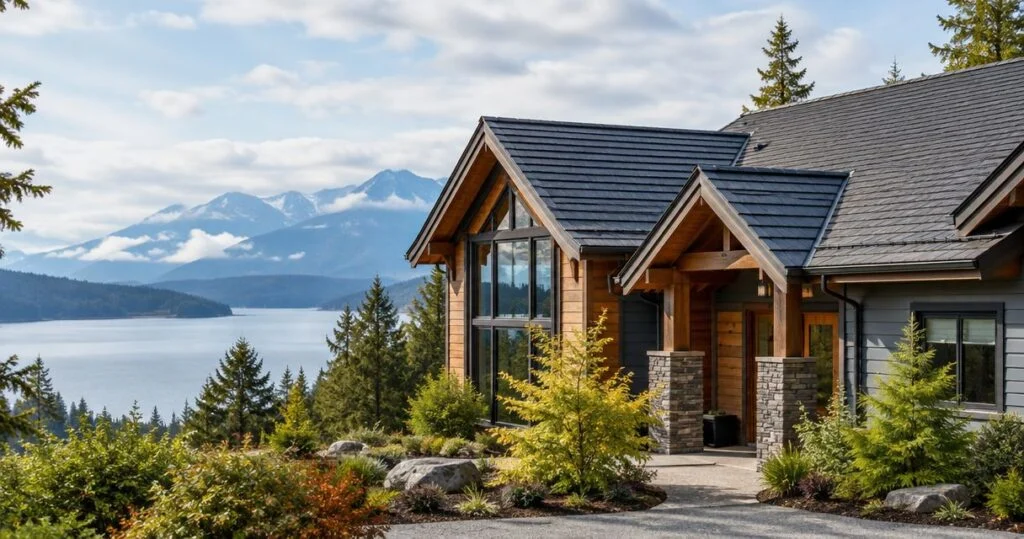
Our pick for most Portland-area homes is charcoal gray. For warm brick and wood, choose earthy brown; for a softer neutral exterior, choose medium gray. Muted green and light gray suit more deliberate exterior palettes. Lioncrest installs GAF, Malarkey and CertainTeed shingles, giving you three manufacturers to compare.
Best roof colors at a glance
- Charcoal gray: our overall pick for a defined roofline and strong contrast.
- Earthy brown: best for warm brick, stone and natural wood.
- Medium gray: best for a balanced, softer neutral exterior.
- Muted green: best for a planned, landscape-inspired palette.
- Light gray: best for a pale, low-contrast exterior.
What makes a roof color right for your home?
A roof is one of the largest visible surfaces on your home. A sample that looks balanced on its own can read too blue, too brown or too stark next to your siding and masonry.
- Permanent finishes: start with the brick, stone and trim you are keeping.
- Undertone: compare warm brown or beige notes against cool blue or gray notes.
- Contrast: decide whether the roof should frame the house or blend into it.
- Daylight: view physical samples outdoors in shade and direct light.
- Busy surfaces: compare a varied shingle blend with the pattern already present in masonry or siding.
1. Charcoal gray: our overall pick
Charcoal gray gives a house a clear roofline without adding another obvious color. It frames white, cream and light gray siding well and leaves room for a bold front door.
Compare a softened charcoal with a sample that reads nearly black. Look at both against the whole side of the house, not just a piece of trim.
What we like: a defined edge above lighter siding and flexibility for accent colors.
Design tradeoff: strong contrast can dominate a small facade, and a cool charcoal can compete with warm cream or orange-toned brick.
Our take: start here. Put charcoal beside your second-favorite sample and compare their undertones with your brick and stone.
2. Earthy brown: best for warm brick and wood
Earthy brown belongs on the shortlist when your home already has warm brick, brown stone, beige finishes or natural wood. The goal is to connect those surfaces rather than match every brown exactly.
Look for red, orange, yellow or gray notes beneath the main color. Two warm materials can still look mismatched when their undertones pull in different directions.
What we like: a softer alternative to charcoal that ties warm finishes together.
Design tradeoff: brown can look muddy beside cool white or blue-gray siding. Too much similar brown can blur the roofline.
Our take: choose brown when warm masonry or wood anchors the exterior.
3. Medium gray: best for a soft neutral exterior
Medium gray is the middle choice when charcoal feels too heavy and light gray feels too pale. The roof stays visible without contrast becoming the main feature.
Gray can lean blue, green, brown or violet. That undertone determines how it looks beside your siding.
What we like: a quieter transition between roof and walls and a useful comparison point between dark and light samples.
Design tradeoff: blue-gray can clash with cream or warm stone. Similar gray siding can make the exterior look flat.
Our take: choose medium gray for balance, then narrow the samples by undertone.
4. Muted green: best for a planned natural palette
Muted green gives the roof its own role in an exterior color scheme. It works especially well as part of a deliberately coordinated palette rather than as a default neutral.
Trees provide useful context, but compare the sample directly with the siding, stone and trim too.
What we like: a subdued alternative when gray and brown both feel wrong.
Design tradeoff: green narrows future paint choices and can compete with strong red brick.
Our take: plan the siding and trim together with the roof.
5. Light gray: best for a pale, low-contrast exterior
Light gray lightens the roof's visual weight instead of outlining the house. It suits siding, trim and masonry that are already pale and restrained.
What we like: an alternative when dark samples overpower the facade.
Design tradeoff: it can look disconnected from dark masonry and give little separation from similar gray siding.
Our take: use light gray for a coordinated pale exterior with definition in the trim.
How to compare roof samples at home
- Start with fixed finishes. Gather samples beside the brick, stone and trim you are keeping.
- Compare undertones. Look for a sample that connects those surfaces rather than pulling attention away from them.
- Check daylight and shade. Use photographs to shortlist colors, then compare physical samples at the house.
- Step back to the street. Decide whether the roof frames the exterior, blends in or takes over.
Explore GAF Timberline HDZ, Malarkey Vista AR product details and CertainTeed Landmark. For a comparison of the shingles themselves, read our Pacific Northwest shingle brand guide.
Choose your roof color with Lioncrest
Lioncrest installs GAF, Malarkey and CertainTeed shingles. We can help you compare roof colors alongside your home's exterior. Book a free roof inspection and explore roof replacement in Portland.
Frequently asked questions
What is the best roof color for a Pacific Northwest home?
Our pick is charcoal gray for a defined, neutral roofline. Earthy brown is our starting point for warm brick, stone and wood.
Is gray or brown better for a Portland home?
Gray suits a cool or neutral exterior; brown complements warm finishes. Compare physical samples with your masonry and trim.
What roof color looks best with red brick?
Compare earthy brown and charcoal against the actual brick. Look at its orange, red or brown undertone before choosing.
Should I choose the roof color before repainting?
Choose the roof, siding and trim colors together, starting with the brick and stone you are keeping.
Can Lioncrest help me choose a roof color?
Yes. Lioncrest installs GAF, Malarkey and CertainTeed shingles and can help you compare color options during a free roof inspection.