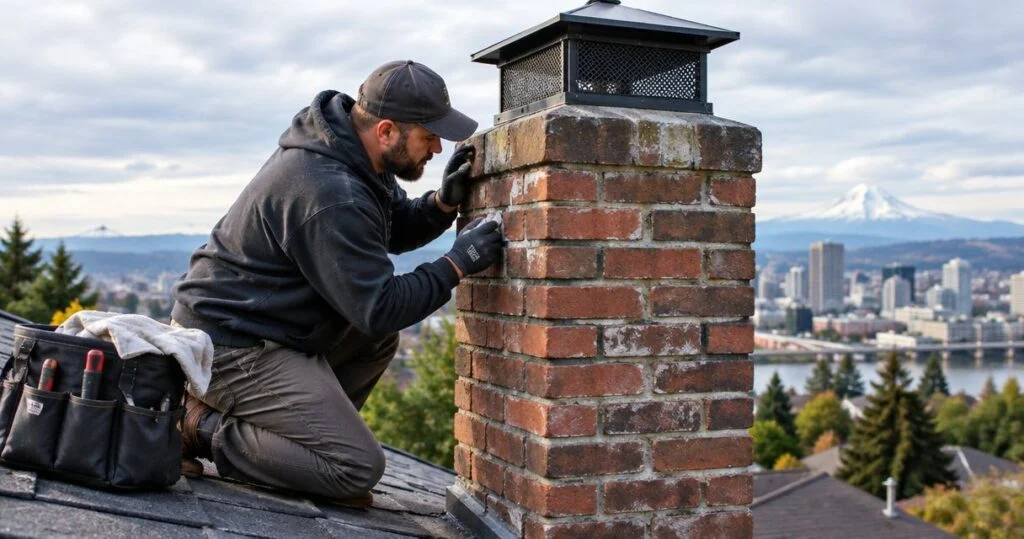
A chimney leak can begin at the cap, crown, brickwork or flashing where the chimney meets the roof. The right repair starts with finding the path the water is taking. A ceiling stain beside the fireplace and water inside the firebox are useful clues, but they do not identify the failed part on their own.
This guide explains the main causes of chimney leaks in Portland, the repairs used to address them and what affects the cost.
Four common causes of chimney leaks and their repairs
1. Flashing at the roof connection
Flashing forms the water-shedding connection between the chimney and roof. Gaps, deterioration or poorly connected flashing can let rain enter at this junction and reach the ceiling or wall below.
The repair: Repairing or replacing the affected flashing and integrating it with the roof covering and chimney. The work should address the flashing assembly rather than simply cover the visible stain's location with sealant.
2. A damaged chimney crown
The crown is the top surface around the flue, above the brickwork. Cracks and deterioration give water a route into the masonry beneath it.
The repair: Localized repairs or a crown coating for a sound crown with minor damage; crown replacement when deterioration is extensive. Replacing the crown is different from rebuilding the entire chimney.
3. Open mortar joints or damaged bricks
Brick and mortar absorb moisture. Open joints and deteriorated brickwork make water entry worse, and repeated wetting can lead to further damage.
The repair: Tuckpointing replaces deteriorated mortar between the bricks. Individual damaged bricks can also be replaced. More extensive deterioration or movement can call for a partial or full chimney rebuild. Water-repellent treatment does not replace missing mortar or repair broken bricks.
4. A missing or damaged chimney cap
The cap covers the flue opening. Without that protection, rain can enter from above. Water in the firebox is a reason to check the cap along with the rest of the chimney.
The repair: Repairing or replacing the damaged cap. A cap and crown are separate components: the cap protects the flue opening, while the crown covers the surrounding masonry.
What to note before the visit
Take photographs of the affected area from indoors and note whether moisture appears during rain, afterward or during wind-driven rain. Tell the team whether you see fresh dripping, damp brick, a wet firebox or an old dry stain. Share any previous chimney repairs and when the problem returned.
A stain can be some distance from the point where water enters, so the chimney top, masonry and roof connection all deserve attention.
What affects chimney leak repair cost in Portland?
The cost follows the work required, not just the size of the indoor stain. The main factors are:
- The failed component: a cap replacement, flashing repair, crown replacement and masonry rebuild are different jobs.
- The extent of damage: replacing a few bricks is different from rebuilding the upper chimney.
- Access: chimney height, roof pitch and access arrangements affect the work.
- The materials and area being repaired: the estimate should identify the components and work included.
A free chimney repair estimate provides pricing for the proposed work. Compare the actual repairs listed, not just the bottom-line total.
Why choose Lioncrest for a chimney leak?
Lioncrest Roofing & Chimney evaluates the masonry, flashing and adjacent roof together when tracing chimney leaks. That combined roofing and chimney experience is useful when the problem crosses the roof-to-chimney connection.
Our chimney repair services include mortar and brickwork, crowns, caps and flashing. For a broader review of the chimney's condition, see our chimney inspection service.
Book a free chimney repair estimate
Chimney leak questions
Does a leaking chimney mean I need a rebuild?
A leak does not automatically mean a rebuild. Sound brickwork may only need targeted repairs to the mortar, crown, cap or flashing. Widespread masonry deterioration or movement can call for rebuilding part or all of the chimney.
Can sealant fix a chimney leak?
It depends on the failed component. Sealing does not replace open mortar joints, damaged brickwork or defective flashing. The repair needs to address the water-entry path.
Can condensation look like a leak?
Moisture can also be associated with the venting system. Tell the inspector whether it follows rainfall, fireplace use or both. A moisture diagnosis does not by itself confirm that a fireplace is safe to use.
How can I help prevent another chimney leak?
Have the cap, crown, mortar joints and flashing checked as part of chimney maintenance. Address damaged components rather than waiting for a new indoor stain.
Further reading
The Chimney Safety Institute of America explains chimney water protection, including caps, crowns, flashing and masonry. The Building America Solution Center describes the chimney-to-roof flashing connection.