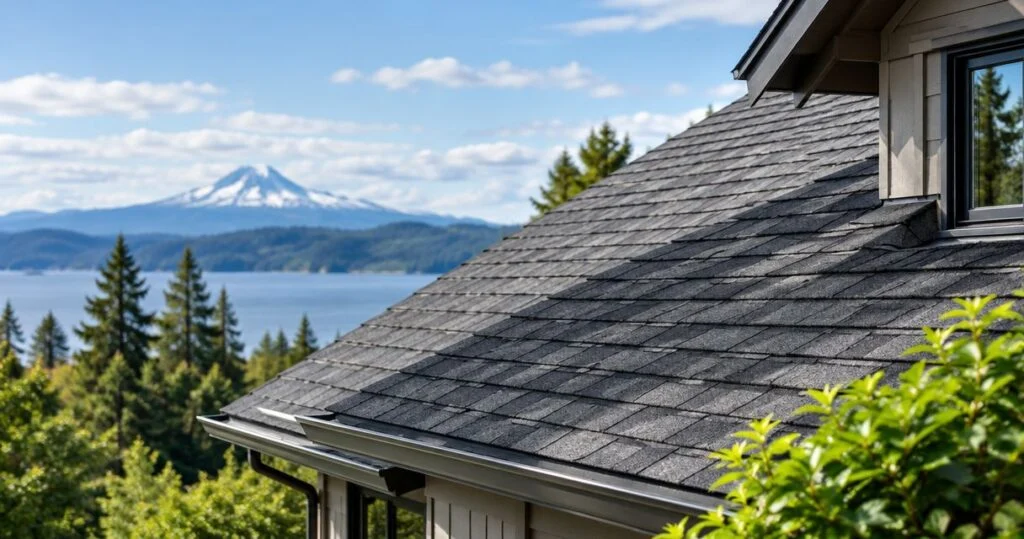
Best overall for a moss-conscious replacement: metal roofing. Best for a conventional shingle roof: algae-resistant architectural asphalt shingles. Worst for moss: cedar shakes, which are often the roof Portland-area homeowners are replacing. This guide compares the options for homeowners in Portland, Beaverton and the surrounding metro, and explains when cleaning is enough.
- Metal is the best roof type to prevent moss in Oregon for a replacement, though no roof is moss-proof.
- Algae-resistant asphalt shingles address algae staining; that label does not mean moss resistance.
- Cedar holds moisture and debris, making it the hardest roof to keep moss-free.
- A sound roof with surface moss often needs cleaning, not replacement. Lioncrest Roofing & Chimney offers roof cleaning and moss removal, roof replacement and chimney work.
Why moss is a Portland problem
Moss on roofs is one of the most common problems in the Pacific Northwest, because moss needs moisture and shade, and the Portland metro has months of both. Portland averages roughly 36 inches of rain a year, most of it between October and May, and Oregon State University Extension notes that in the moist Pacific Northwest, moss on roofs is inevitable without attention to the conditions that invite it. Leaves and fir needles collect on roofs, hold water against the surface and give moss a place to start. Material matters, but so do overhanging branches, drainage and the places where debris collects.
Before comparing replacement proposals, separate an aging roof from a dirty one. A sound roof with surface moss may only need professional cleaning and moss removal. A roof with curled, cracked or deteriorated material, or one that leaks, is a different decision. Lioncrest Roofing & Chimney provides free inspections to help homeowners in Portland, Beaverton, Hillsboro, Lake Oswego, Tigard, Clackamas, Oregon City and Gresham tell the difference.
What makes a roof better at limiting moss?
- Surface texture: A smooth surface offers fewer places for debris to lodge than a textured or weathered one.
- Drying conditions: Persistent shade and trapped debris matter regardless of the roof covering.
- Debris traps: Valleys, roof intersections, gutters and chimney junctions collect needles and leaves.
- Roof compatibility: Your slope, structure and installation requirements determine which materials belong on the shortlist.
- Cleaning requirements: Compare each product’s approved cleaning methods before choosing a roof.
- Claim accuracy: Algae resistance, moss resistance and warranty coverage are different things. Keep them separate when comparing proposals.
Roof types at a glance
| Rank and roof type | Best for | Standout feature | Key limitation |
|---|---|---|---|
| 1. Metal roofing | Replacements focused on limiting moss | Smooth surface with no wood fiber for growth | Debris and moss can still collect at seams, valleys and shaded areas |
| 2. Algae-resistant asphalt shingles | Homeowners who want a conventional shingle roof | Products with algae-resistant granules | Algae resistance does not establish moss protection |
| 3. Cedar shakes | Not recommended for moss-prone sites | Natural wood appearance | Rough, porous surface holds moisture and debris |
This ranking compares surface characteristics and maintenance needs. It is not a laboratory moss-growth trial.
1. Metal roofing: best for a moss-conscious replacement
Metal roofing is the strongest starting point when you’re already replacing a roof and want to limit moss. Its smooth surface sheds water and debris more readily than shingles or wood, and it contains no wood fiber for moss to root in. It still needs attention at seams, fasteners, valleys and penetrations, where needles can pile up in shade.
The advantage is conditional: a clean metal roof in the open behaves very differently from a shaded metal valley buried under fir needles. Roof geometry and tree cover still matter.
Pros:
- Smooth panels shed water and loose debris readily.
- No wood fiber or textured granules for moss to root in.
- A clean, modern alternative to another shingle roof.
Cons:
- Leaves and needles still collect at roof intersections and obstructions.
- Coatings and cleaning methods require product-specific instructions.
- Suitability depends on roof slope and the selected metal system.
Best for: Homeowners replacing a roof who want the lowest-maintenance option for moss.
Verdict: Choose metal when replacement is justified and the system suits your roof.
2. Algae-resistant asphalt shingles: best for a shingle roof
Algae-resistant architectural shingles suit homeowners who want a conventional shingle roof while limiting the dark algae streaks common on Portland roofs. The important distinction is biological: algae and moss are different organisms, and a product’s algae claim does not establish that the roof will resist moss.
Shingles remain the most common choice for Portland homes, and a new shingle roof on a site with good sun and drainage can stay relatively clean. On a heavily shaded lot, plan for regular debris clearing and periodic cleaning.
Pros:
- Keeps a conventional shingle appearance.
- Algae-resistant granules limit dark streaking.
- Works across most residential roof shapes.
Cons:
- The textured surface can hold debris in shaded areas.
- Algae-related coverage does not include moss.
- Aggressive cleaning, including pressure washing, can strip granules.
Best for: Homeowners choosing shingles who understand that algae protection does not eliminate moss maintenance.
Verdict: Choose algae-resistant shingles for a shingle replacement; be wary of any proposal presenting algae resistance as moss immunity.
3. Cedar shakes: the hardest roof to keep moss-free
Cedar shakes give a natural wood look, but they’re the hardest roof type to keep moss-free in Oregon. The rough, porous surface holds moisture, and the gaps between shakes trap needles and organic debris. Under tree cover, moss can take hold quickly and speed up the wood’s deterioration.
Many cedar roofs in the Portland metro are reaching the end of their life. If moss keeps coming back on yours, ask whether the shakes themselves are splitting, cupping or softening. Removing moss doesn’t restore deteriorated wood, and replacing cedar with metal or architectural shingles is a common way to end the cycle.
Pros:
- Distinctive natural wood appearance.
- Suits some older and rustic home styles.
Cons:
- Rough surface and gaps hold moisture and debris.
- Moss accelerates wood deterioration.
- Ongoing cleaning and treatment are required.
Best for: Homeowners committed to a wood roof who accept a demanding maintenance schedule.
Verdict: If moss is your main concern, replace aging cedar with metal or algae-resistant shingles.
When cleaning is enough
Moss doesn’t automatically mean you need a new roof. If the roofing material is still sound, with no curling, cracking or leaks, professional roof cleaning and moss removal can restore the surface and extend the roof’s life. Left alone, moss holds moisture against the roof, lifts shingle edges and accelerates wear, so removing it early protects the roof you already have.
Lioncrest Roofing & Chimney offers roof cleaning and roof moss removal across the Portland metro, along with moss treatment to slow regrowth. A free inspection tells you whether your roof needs cleaning, replacement or neither, so you don’t pay for a new roof when cleaning will do.
Fix the conditions that keep a roof wet
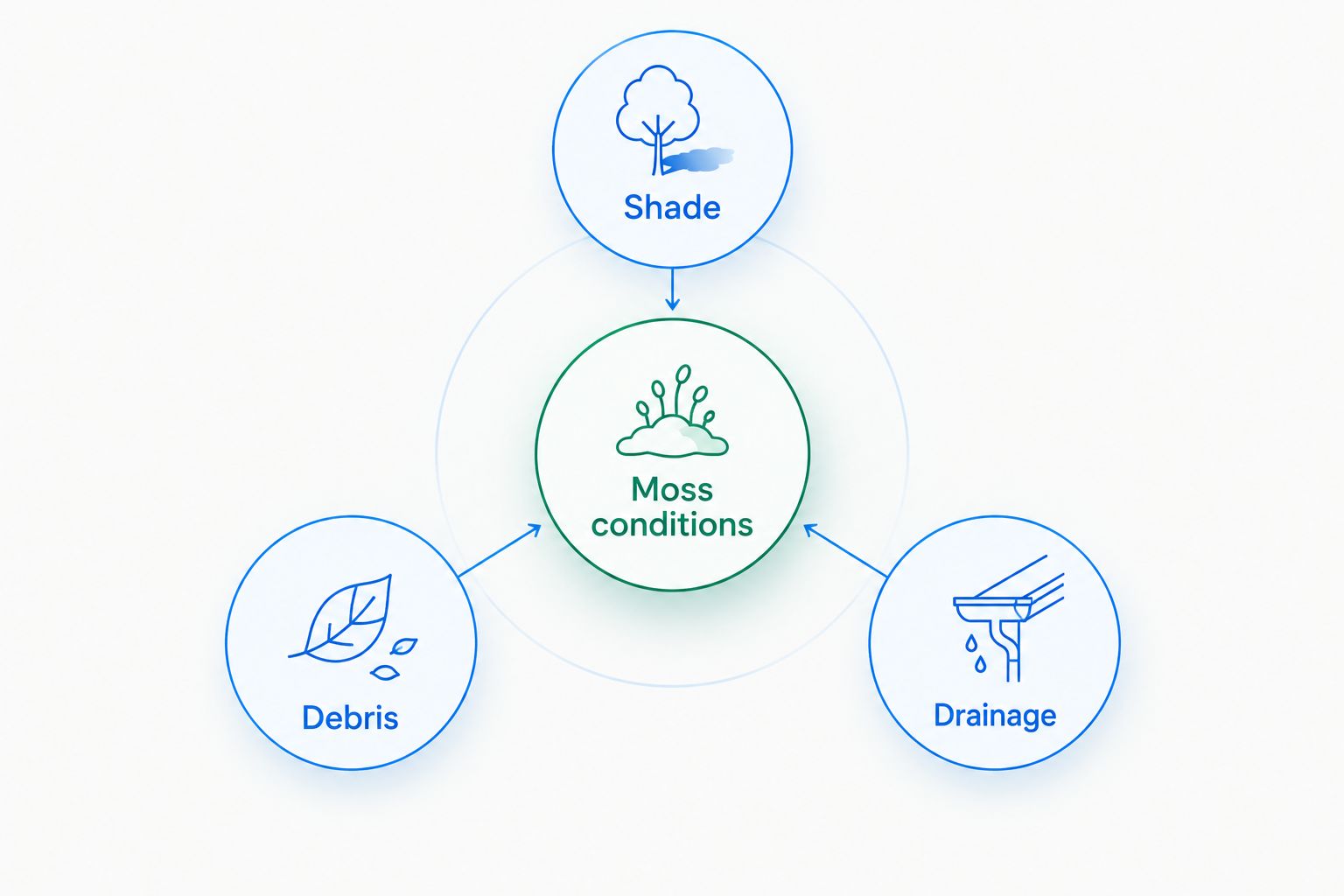
Whether you clean or replace, a shaded valley or overhanging branch will keep inviting moss back. Walk through these three conditions with your roofer from the ground. Don’t climb onto the roof to check them yourself.
Shade: Identify areas that stay shaded by trees or nearby structures. Discuss pruning with a qualified tree professional; pruning alone won’t solve a roof problem, but it makes any roof easier to keep clean.
Debris: Find the valleys, chimney junctions and other spots where needles collect. Ask how those areas will be cleared without damaging the roof covering.
Drainage: Check whether gutters and downspouts are clogged. Water that backs up at the roof edge keeps shingles and wood wet longer.
On some roofs, zinc or copper strips installed near the ridge act as a long-term moss treatment, slowing regrowth as rainwater carries trace metals down the roof. OSU Extension recommends letting more sun reach the roof surface — pruning, keeping the roof clear of debris and, where the material allows, commercial moss-control products — and asks homeowners to leave pressure washing to methods the manufacturer permits. Ask whether these options suit your roof and material.
Moss questions to raise in your replacement proposal
If replacement is the right call, moss shapes several decisions that a generic roofing proposal can skip. Ask for:
- Material fit for your lot: How the proposed material will perform with your specific shade and tree cover.
- Valley and chimney details: How debris-prone areas will be built to shed needles rather than hold them.
- Cleaning instructions: The manufacturer’s approved cleaning methods for the material you choose.
- Gutter and edge details: How water and debris will leave the roof edge.
- Warranty terms: What the written warranty covers, and whether moss or algae are addressed.
- Licensing: Confirm the contractor’s license using the Oregon CCB license lookup.
Roof replacement with Lioncrest Roofing & Chimney starts at $9,999 for a 1,500-square-foot roof, measured by roof area, not house floor area. Every replacement includes a free inspection, a written proposal within 24 hours, workmanship and material warranties from 10 years up to a lifetime, and drone footage and progress photos during the project. No additional work proceeds until you approve the change order, and Lioncrest price-matches comparable companies using comparable materials.
You can call or submit an online inquiry. Mention any moss, shade or chimney concerns so the inspection covers them.
Request a roof inspection
Find out whether your roof needs cleaning or replacement with a free inspection and a written proposal within 24 hours.
Which roof type should you choose?
If your roof is still sound, start with professional cleaning and moss removal. If you’re replacing, choose metal for the most moss-resistant roof, keeping in mind that no roof is maintenance-free, or algae-resistant asphalt shingles for a conventional look you can keep clear. If you have an aging cedar roof with recurring moss, replacing it is often the most practical way to end the cycle.
Frequently Asked Questions
What’s the best roof type to prevent moss in Oregon?
Metal is the best roof type for limiting moss because its smooth surface sheds water and debris and contains no wood fiber for moss to root in. It isn’t moss-proof, and shaded seams and valleys still need occasional clearing.
Do algae-resistant shingles stop moss from growing?
No. Algae-resistant shingles target algae staining, and algae and moss are different organisms. Shaded, debris-covered shingle roofs can still grow moss.
Should I replace my roof just because it has moss?
Not necessarily. Surface moss on a sound roof can usually be handled with professional cleaning and moss removal. If the roofing material is curling, cracking or deteriorating, or the roof leaks, replacement may be the better choice. A free inspection can tell you which applies.
Does Lioncrest offer roof cleaning and moss removal?
Yes. Lioncrest Roofing & Chimney offers roof cleaning and moss removal for homeowners across the Portland metro, along with roof replacement and chimney services.
How often should I clean moss off my roof in Portland?
It depends on shade and tree cover. Heavily shaded roofs in the Pacific Northwest may need roof moss removal every year or two, while sunny roofs can go longer. An inspection can set the right schedule for your roof.
Why does moss grow so much on cedar roofs?
Cedar’s rough, porous surface holds moisture, and the gaps between shakes trap needles and debris. In Oregon’s wet climate, that combination makes cedar the most moss-prone common roof type.
Can I pressure-wash moss off my roof?
Not unless the roofing manufacturer’s instructions explicitly allow it. Pressure washing can strip shingle granules and damage wood, and roof access is a fall hazard. Professional moss removal uses methods suited to your roofing material.
How much does roof replacement cost with Lioncrest?
Roof replacement with Lioncrest Roofing & Chimney starts at $9,999 for a 1,500-square-foot roof, measured by roof area rather than house floor area. You’ll get a free inspection and a written proposal for your specific roof within 24 hours.
Does moss damage chimneys?
Moss and debris often collect where the roof meets the chimney, holding water against flashing and masonry. Lioncrest handles roof cleaning, roofing and chimney work, so that junction can be inspected in the same visit.
One last thing
Moss is usually a symptom, not the root problem. Shade, trapped debris and slow drainage are what keep a roof wet. Fix those conditions, clean the roof before moss does damage, and choose a material suited to your lot when it’s time to replace.
Related guides
- Roof replacement in Beaverton
- Roofing services in Tigard
- Chimney sweep services in Portland
- About Lioncrest
- Contact Lioncrest about your roofing project